Inspiration
I remember that as a kid I was thrilled by music in any format. When I went to visit my aunt, my 9 years older cousin often was heard playing Elvis and Cliff Richard songs on the piano in their living room. In her middle teens she was very much into the contemporary music of the time, and enjoyed playing what she also had on her vinyl albums. At the age of 7 I lied daydreaming on the floor with my ear against the wooden piano case listening to her playing. The sound was awesome, I was completely carried away.
The sixties and seventies came along, and I listened to BBC and Radio Luxembourg on a tiny radio in my bed before falling asleep. Very much happened those days, and also instrumentals appeared on the charts, the sky was wide open to anyone with a talent for music. Even jazz pieces made it on the charts, for instance «Take five» by Dave Brubeck and Paul Desmond.
I attended a guitar course at the age of 14, after having a cheap but new acoustic guitar for my birthday. I loved playing it, so I advanced rapidly, but it all stranded after that course since I had nobody to play with. Then some 4-5 years went by before I bought my big brothers saxophone as he was going abroad for university and found out he did not have enough time for both music and books.
I did not listen extensively to sax players, my endless appetite for music lead me to listening to piano, guitar, saxophone or whatever. I was hooked up on music, but no particular instruments. In the 70s some really amazing and powerful guitar players came along, and it continued to flourish in the 80s, as virtually no rock song was made without including some crazy exhibitionist virtuoso playing solo..
At that time saxophones appeared quite frequently in pop songs in addition to blues and jazz. Many of them were not good, though. As I had a conversation with a member of a touring american R&B band in a club in Norway, I asked him why on earth they brought such a lousy saxophonist, I was told that it was because the gigs were better paid if a band had a sax player. This guy had only been playing sax for a year or two, and he was very aware of his market value, but a guy not well liked among the other band members. Also major pop artists had quite poor sounding sax players.
In jazz, however, the virtuosity appeared among players of any category of instruments. But in my heart I was a rock’n’roll rebel without a very sophisticated taste. Energy was what I was looking for. I was amazed by electric guitar, the number one rock'n'roll medium. Me playing sax instead of guitar was just fate, but I realized that the sax could easily become my vehicle for emotional outbursts. Life was not easy at that time in life, I was kind of rootless. I must have needed a way to ease the inner pressure and channel it into something good.
Although having found inspiration in music genres where saxophone often was totally absent, sax players like Cannonball Adderly, Junior Walker, Wilton Felder, Ron Asprey, Andy Sheppard, Mel Collins, Clarence Clemons, Gato Barbieri, Jan Garbarek and others had a heavy impact on me. They were as diverse as my musical taste. Some of them are best known for either jazz or rock, but some also for crossing genres.
The 90s were busy, I was often invited into bands and studio sessions. Then, in the new millennium, guitars have been dominant in pop, rock and blues. As aging kicks in, rock performers understand they are not so sexy anymore and often enter an identity crisis, ending up in either worshiping the old days or finding new content to put into their lives. The sax was like an extra arm to me, but I was tired of mainstream popular music. I moved into improvisations and music styles that were not so established and conventional..
Taste may also change over the years, as personality and emotional depth evolve. Improvisational music can be a means channeling instant emotions between a performer and an audience, sometimes driving me to tears, other times into euphoria. This exchange is the origin of the widely used textline «Music is gonna set you free». It is true. It sets you free.
The jazz scene, at least in my part of the world, is very liberal when it comes to age, sex and ethnicity as well as musical background and other factors. It is a universe where originality has a market value more than adapting to whatever is popular at the moment. Every artist or performer who will not easily fall into any well defined musical categories, can find a home here. So the very concept of jazz will set you free. It is for anyone with some competence on their instrument and a hope to make a difference. Yes, there are puritans there as elsewhere in the cultural landscape, but they are not dominant.
After a while ambient soundscapes and world music tempted me more than anything else. For decades Loreena McKennitt was the artist I preferred listening to whenever I had time to sit down and worship music. With the pandemic came poverty among musicians having had a decent income up till then. McKennitt wrote to her fans that her cello player had a site on Patreon.com to support herself besides whatever came in through live performances, that were fewer during the pandemic. That was when a new chapter of my musical life began.
Caroline Lavelle, besides being a cello player of format, also is a very special singer and composer that went under my skin from the very first time I listened to her music. Her warm alto voice entangled in arrangements unheard of and cello passages in hypnotic soundscapes really turned me on musically. We "met" on her Patreon forum, and since then we have exchanged stems and released some of her songs in a new dressing. Reviews have been great.
Nature
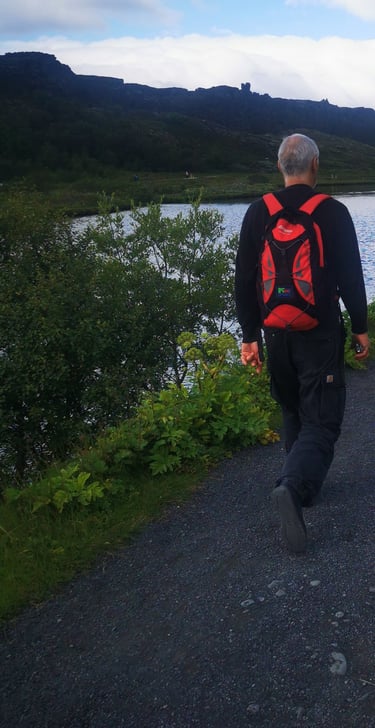
Life has its ups and downs, but nature can come to the rescue for anyone who is in a poor condition mentally or physically. Anyone may drop into this discovery by accident, and be given extreme and peaceful experiences simultaneously . Then nature becomes the station for filling up the energy reservoir. For good reasons it serves as a source of inspiration for many a creator of Nordic jazz and ambient music. What comes out of this process most times is different from urban jazz, that often has an energetic beat to it, reflecting the pace of the city.
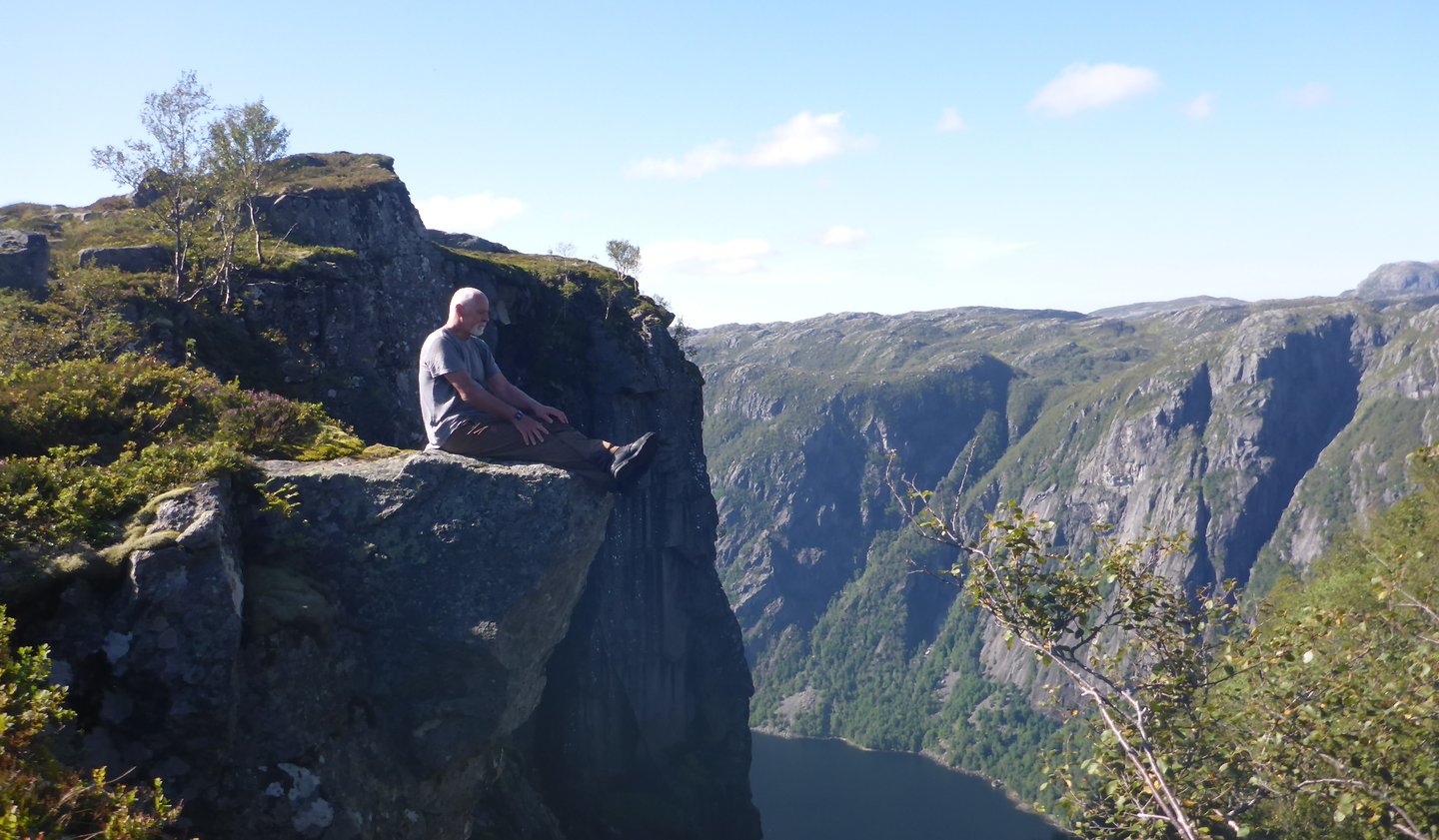
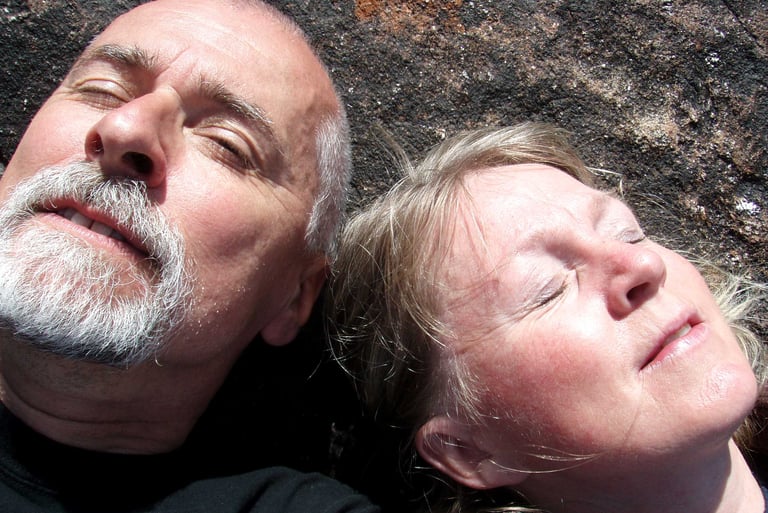
If you sit down on a rock and look around you, peace and silence comes along. Maybe the only sound you hear is a bee on a flower twenty meters away. Everywhere around you there is life, but you can only grasp the surface of it. Small events and incidents combine and add up to huge processes behind the scenes. Your own contributions are included. You sense a big entity behind it all, nature itself. Am I religious? Maybe not in the common sense of the word. This is as close as I get towards concluding that there is something more there behind it all.
You rest and feel safe despite being in constant danger like any other being. You run for shelter as a rainstorm bursts out on you, and in the next moment the sun is shining and the rays fill you with energy. The silence and calm when nothing is going on gives you an urge to start something. Joy is coming on as you move along, amazed by the surroundings. You need to share this with someone, and maybe you try to later on, through the music you make.
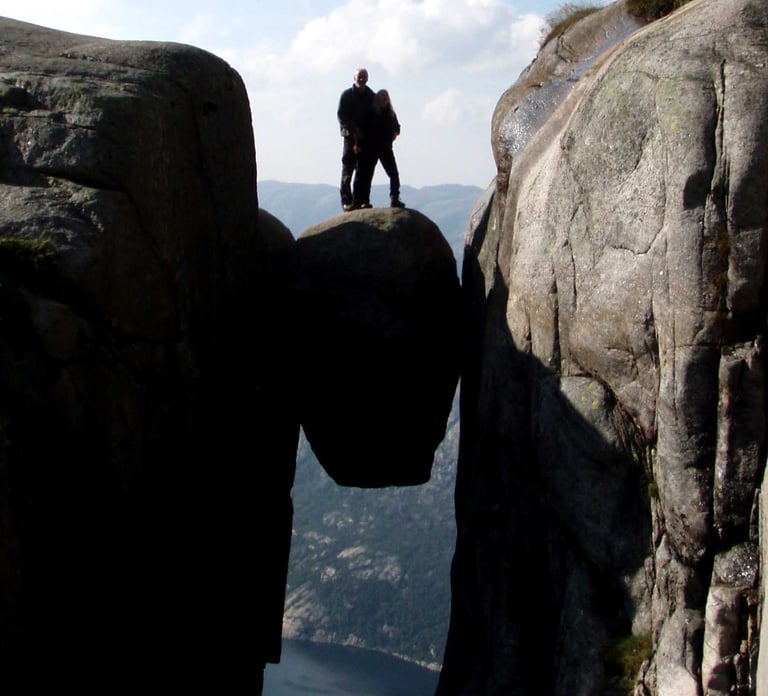
You are an alien from the human civilization, yet you feel somehow embraced and taken care of. You feel at home in some mysterious way. Yin and yang are present at the same time. Being in constant danger and at the same time relaxed becomes a natural state, like it is for the wildlife around you. This is where we came from.
You learn what life is about. The moment captures your attention, yet you are led into dreaming, looking forward, contemplation on the importance of things.
To check out my music, search for "Piftemaen" on your favourite streaming platform, or press one of the black buttons